 2026, Vol. 47


2. 中国科学院地球化学研究所环境地球化学国家重点实验室,贵阳 550081;
3. 中国科学院大学,北京 100049;
4. 生态环境部长江流域生态环境监督管理局生态环境监测与科学研究中心,武汉 430010;
5. 上海海洋大学海洋科学与生态环境学院,上海 201306
 , ZENG Yan2 , WANG Yu-chun1
 , ZHANG Jing4 , AN Ying5 , LIN Tian5 , WANG Jing-fu2 , CHEN Jing-an2
2. State Key Laboratory of Environmental Geochemistry, Institute of Geochemistry, Chinese Academy of Sciences, Guiyang 550081, China;
3. University of Chinese Academy of Sciences, Beijing 100049, China;
4. Yangtze River Basin Ecological Environment Monitoring and Scientific Research Center, Yangtze River Basin Ecological Environment Supervision and Administration Bureau, Ministry of Ecology and Environment, Wuhan 430010, China;
5. College of Oceanography and Ecological Science, Shanghai Ocean University, Shanghai 201306, China
随着全球经济快速发展和工业化、城市化进程加速,化学品的生产与使用量激增,由此引发的环境污染问题日趋严峻[1~3]. 目前,注册的化学品数量已超过2.79亿[4],化学品种类和排放量的持续增长对生态系统稳定性构成重大威胁[5]. 以上化学品包括了多环芳烃(PAHs)、多氯联苯(PCBs)和有机氯农药(OCPs)等传统的污染物,也包括了抗生素(ANTs)、新型溴代阻燃剂(NBFRs)以及全氟和多氟烷基物质(PFASs)等新污染物. 以上污染物通过市政废水[6,7]、工业排放[8]、下水道泄漏、垃圾渗滤液和地表径流[9,10]等多种途径进入水生环境[11~13],导致水体污染物种类增多、浓度升高,严重破坏水质并威胁水生生态健康[14]. 此外,污染物的迁移与放大效应尤为严峻,亲脂性的污染物能够在生物体中积累并通过食物链进行生物放大[15,16],人类食用受到污染的鱼类可能引发疾病. 有研究表明,全球的工业废水和生活污水约有80%未经处理就排放到水体,每天向水体排放的污水、工业和农业废物高达200万t,导致传染性水媒疾病,其死亡人数超过了战争等暴力造成的死亡人数[12]. 因此,科学管控污染物已成为保护水生生态安全的迫切需求.
鉴于化学品种类繁杂、数量庞大,在有限的技术手段与资源条件下,难以实现对污染物的全面监测与治理. 因此,亟需科学识别并筛选出对生态系统具有高风险的优先污染物[17,18]. 优先污染物筛选是指通过系统评估污染物的毒性强度、环境检出频率、环境持久性及生物蓄积性等核心指标,从众多有毒有害污染物中识别出对环境和人体健康威胁最大、需优先管控的污染物. 1977年,美国环境保护署(US EPA)根据污染物的检出频率和生产量等指标首次制定出129种优先污染物清单[19]. 1991年,中国根据污染物的检出频率和毒性等指标筛选出68种,列入水环境优先污染物清单[20].
目前,河流水体优先污染物筛选常用的方法有风险熵法[21~23]、综合评分法[24]和潜在危害指数法[25]. 风险熵法基于污染物环境浓度与毒性阈值的比值实现快速初筛,适用于高风险污染物识别[26]. 综合评分法整合环境暴露水平、持久性、生物累积性、生态及健康风险等多维度指标,但权重赋值依赖专家经验,存在主观偏差[27]. 潜在危害指数法主要考虑污染物潜在危害性,但忽略环境暴露浓度与迁移行为,需与其他方法联用以提升可靠性[28]. 为了解决以上方法的局限性,Zhong等[27]开发了一种多标准筛选方法,将浓度、检出率、持久性、生物累积性、生态毒性和人类健康影响整合为危害潜力(HP)与暴露潜力(EP),利用风险熵补充筛选避免遗漏高风险污染物,将EP和HP转换为无量纲值,二者乘积作为优先指数对污染物进行排序.
长江面临多种有机微污染物(OMPs)的威胁,包括传统污染物(如PAHs、PCBs、OCPs)及新污染物(如ANTs、PFASs)[29]. 闫路等[30]对20 a来已发表文献中长江地区污染物数据进行了收集和整理,结果显示长江地表水新污染物(涵盖工业化学品、农药、药品及个人护理品等17类典型OMPs,共计412种化合物)的整体生态风险处于中低水平,但是长江下游生态风险处于中高风险水平,亟需针对该区域制定优先管控措施. 近年来,尽管关于长江流域新型污染物的研究逐渐增多,但多集中在单一化合物的生态风险评估[31~33]. 而长江干流地表水优先污染物筛查主要集中在重庆段[34~36],采用多标准排序方法进行筛选. 长江下游地区作为长江经济带的核心区,承载经济支柱与生态屏障双重功能,但高强度工业化与城镇化导致严重水环境压力,2017年仅江苏省工业废水排放量高达16.52亿t,位于全国首位[37]. 南京市是长江三角洲和华东地区的主要大城市,经济和城镇化发展程度较高[38]. 经济增长的同时也带来了水污染问题,可能导致水体OMPs污染增加,从而影响水生生态系统安全. 然而,目前尚无对长江干流下游芜湖至南京段的OMPs展开筛查研究,经济增长引发的OMPs潜在生态安全威胁不明. 因此,本研究以长江干流芜湖段至南京段为研究区域,通过实地采样与污染物检测,获取环境浓度数据. 借鉴Zhong等[27]开发的方法,以浓度、检出率、持久性、生物累积性和生态毒性为核心指标,系统开展该河段OMPs综合识别与优控清单构建,以期为生态保护及精准治理提供科学决策支撑.
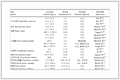
1 材料与方法 1.1 目标污染物本研究选取了10类197种化合物为目标污染物,其中抗生素34种、甜味剂6种、全氟和多氟烷基类物质32种、邻苯二甲酸酯26种、双酚类化合物2种、有机氯农药20种、多环芳烃15种、多氯联苯29种、多溴联苯醚19种和新型溴代阻燃剂14种. 目标污染物清单见表 1. 10类197种目标污染物中共检出10类150种,其中ANTs 9种、SAs 4种、PFASs 31种、PAEs 19种、BPs 2种、OCPs 18种、PAHs 15种、PCBs 25种、PBDEs 15种和NBFRs 12种.
|
表 1 目标污染物清单 Table 1 List of target pollutants |
1.2 研究区域和样品采集
长江全长6 300 km,是亚洲最大的河流[39]. 本研究以长江干流芜湖段至南京段为研究区域,该河段地处长江下游,自西向东贯穿安徽、江苏两省核心经济带. 芜湖河段位于安徽省芜湖市,河道全长118.4 km[40]. 马鞍山段自西向东上起东西梁山与芜裕河段相接,下讫慈姆山与南京河段相连,分为进口段、江心洲段、小黄洲段和过渡段,全长36 km[41]. 长江南京段自安徽省东部入南京市境内,横贯南京市的河段长约97 km,下接镇扬河段,岸线全长近200 km,平均水深超过15 m[42].
根据长江水文网公布的降水与流量数据,长江中下游地区4月降水量显著增加,同时,长江干流下游大通水文站的月平均流量也呈现明显上升趋势. 已有研究指出,降水可通过湿沉降作用将大气中的污染物转移至河流,并通过地表径流将河流周边区域的污染物携带入河[43]. 此外,降雨引起的水流扰动还会加剧底泥的悬浮与释放,使沉积于底泥中的污染物重新进入水环境[44]. 因此,4月可能面临着更为严重的污染物威胁. 2023年4月27~28日,借助生态环境部长江流域生态环境监督管理局的中国环监008科考船进行样品采集,在长江干流芜湖段至南京段共布设15个点位(图 1),利用不锈钢采水器采集深度0.5 m表层水体25 L,分装于棕色玻璃瓶和聚乙烯塑料瓶,现场利用水质参数仪测定水温、pH、溶解氧和电导率.

|
图 1 采样点位示意 Fig. 1 Sampling locations |
水样中PAHs、OCPs、PCBs、PBDEs、NBFRs的富集采用20 L GF/F滤膜过滤后经XAD2∶XAD4树脂(1∶1,质量比)完成[45],前处理参照文献[46]. 其中PAHs使用GC-MS/MS(Agilent 9000-7000D)分析,回收率53%~108%,检出限0.01~0.90 ng·L-1. OCPs、PCBs、PBDEs及NBFRs使用GC-MS(Shimadzu TQ8050 NX)分析,回收率分别为84%~111%(OCPs)、64%~121%(PCBs)和71%~104%(PBDEs/NBFRs),检出限(ng·L-1)分别为:3.57×10-4~0.11(OCPs)、0.001~0.023(PCBs)和6.07×10-⁷~0.06(PBDEs/NBFRs).
PFASs、ANTs、PAEs/BPs和SAs的前处理步骤为:水样经GF/F过滤后进行固相萃取(SPE). PFASs前处理参见文献[47],采用UPLC-MS/MS(Shimadzu)分析,回收率68%~80%,检出限0.001~0.11 ng·L-1. ANTs前处理参照文献[48],采用UPLC-MS/MS(Shimadzu)分析,回收率71%~99%,检出限0.5~20 ng·L-1. PAEs和BPs前处理参照文献[49],采用GC-MS(Agilent 7890B-5977B)分析,回收率88%~90%,检出限5.3~56 ng·L-1. SAs参照文献[50],采用LC-MS/MS(Waters Xevo TQS)分析,回收率84.1%~91.1%,检出限0.4~17 ng·L-1.
1.4 筛选方法本研究采用污染物浓度、检出频率、环境持久性、生物蓄积性和生态毒性作为评价参数构建综合评价体系,根据污染物的危害效应、发生情况和风险评价顺序进行筛选. 污染物HP用持久性、生物累积性和生态毒性这3个参数表征,EP用污染物浓度和检出频率表征. 最后,根据EP和HP计算筛选污染物的优先级指数(PI)值,对污染物进行排名,并根据PI生成优先污染物清单. 该清单对于长江大保护和实现水环境质量持续改善的具有重要意义.
1.5 数据收集 1.5.1 持久性和生物累积性持久性用生物降解系数(BIOWIN)评估,BIOWIN值越小表明污染物在环境中的持久性越强、越难降解. 生物累积性用辛醇-水分配系数(Kow)评估,Kow可以反映污染物在水相与有机体之间的迁移能力,其值越大表明污染物的疏水性越强、生物累积性越高[51]. BIOWIN值由EPI Suite 4.1软件的BIOWIN 3模型进行估算[52],Kow值由EPI Suite 4.1软件的KOWWIN模型获得,Kow值优先选用实验数据,没有实验数据时选用估算数据.
1.5.2 生态毒性污染物对生态系统的影响采用PNEC(预测无效应浓度,ng·L-1)进行评估. PNEC优先使用慢性毒性数据(NOEC)和评估因子(AF)计算,根据藻类、甲壳类和鱼类营养级数据的可获得性,AF值分别为100、50和10. 如果没有NOEC,PNEC用半数效应浓度(EC50)或半数致死浓度(LC50)和AF计算,AF设置为1 000[27].
| (1) |
毒性数据NOEC、EC50、LC50来源于美国ECOTOX毒性数据库[53]. 在筛选优先污染物过程中,当有多个NOEC可用时,采用最低值以最好地防范潜在的毒性风险. 对于没有实验测量生态毒性数据的OMPs,由EPI Suite 4.1软件ECOSAR模型获得3个营养级(即藻类、甲壳类和鱼类)的NOEC[27].
污染物的生态风险商RQ根据式(2)计算,MEC为每种OMPs单体测量浓度的第90百分位数(ng·L-1)[27].
| (2) |
数据预处理工作涉及以下内容:低于方法检测限(MDL)的OMPs浓度被MDL的1/2取代. 使用中位浓度进行优先污染物筛选,因为中位浓度受异常值和ND响应的影响较小. 由于数据分布范围较广,将PNEC和质量浓度值分别转换为以10为底的对数和以2为底的对数. 使用最小-最大归一化法将数据归一化为0~1区间的无量纲数值[54],既保留原始数据的分布特征与相对量值关系,又降低了异常值对整体数据结构的干扰[55,56].
1.6.2 多变量分析法主成分分析(PCA)是一种经典的降维方法,PCA通过提取方差贡献最大的主成分(PC1)构建综合评价变量,该变量已被用于表征OMPs的持久性、生物累积性和生态毒性[57]. 在本研究中,对污染物的持久性、生物累积性、生态毒性的标准化数据进行PCA分析,将PC1定义为综合危害潜力(HP)以反映多维度危害效应的累积作用,将HP阈值设置为0.4以筛选污染物. 针对污染物浓度与检出率两项暴露因子的标准化数据,通过PC1构建暴露潜力(EP)变量以量化暴露风险,将EP阈值设置为0.5以筛选污染物[58].
1.6.3 优先级将EP和HP转化为0~1范围内的无量纲项,通过将归一化EP和归一化HP相乘,确定了污染物PI值. 由于与优先级排序相关的5个主要因素被归一化为无量纲变量,因此它们可以代表污染物的独立特征.
2 结果与分析 2.1 危害表征对水体检出的150种污染物进行了PCA分析,如图 2所示. 图 2(a)表明4种危害参数PC1解释了64.8%、PC2解释了22.1%,总体解释了86.9%,PC1在总方差中显示了主要作用. 在PCA图中,持久性强的污染物位于图的右上方,生物累积性强、对生态毒性大的污染物位于PCA图的右下方. 通过K-means聚类,根据污染物的持久性、生物累积性、生态毒性将OMPs划分为4组,如图 2(a)所示. Ⅰ组和Ⅱ组位于PC1值的中间范围. Ⅰ主要包括负PC2值的污染物,具有更高的生态毒性. Ⅱ组主要包括正PC2值的污染物,在环境中的持久性更强. Ⅲ组具有较高的PC1值,表明污染物综合危害较大. Ⅳ组具有较低的PC1值,表明污染物综合危害较小. 此外,采用多元线性回归确定HP与3个危险因素之间的关系,回归模型方程R2大于0.99,可以有效地量化HP,线性方程见式(3).
| $ \begin{array}{l} {\rm{HP}} = 2.25 \times 持久性 + 3.45 \times 生物累积性 + \\ \;\;\;\;\;\;\;\;\;\;2.55 \times 生态毒性 - 4.41 \end{array} $ | (3) |

|
图 2 基于PCA的危害表征结果及各类污染物的HP箱线图 Fig. 2 Hazard characterization results based on PCA and HP box plots of various pollutants |
图 3揭示了3项危害评价参数(持久性、生物累积性和生态毒性)与PC1的线性关系,PC1随着污染物持久性、生物累积性、生态毒性的增加而增加,表明HP的预测趋势. 在研究的10类污染物中PBDEs、PFASs、PCBs和OCPs污染物具有较强的持久性,PBDEs和PCBs污染物具有较强的生物累积性和生态毒性. 图 2(b)表明,在10类污染物中PBDEs的HP值最高,其次为PCBs和OCPs,表明PBDEs、PCBs和OCPs的综合危害效应较大. SAs的HP值最低,表明其危害综合危害效应较小. 为了确定合适的HP阈值,使用了美国环保署CCL5、欧盟WFD观察清单和重点管控新污染物清单(2023年版)中列出的污染物对本研究的候选污染物进行危害评估筛选,以上清单中的污染物有81.8%位于Ⅰ组和Ⅲ组,其余的污染物位于Ⅱ组. 在本研究中,将HP阈值设置为PC1值0.4,这种筛选方法捕获了上述清单中81.8%以上的污染物,筛选出了116种OMPs清单.

|
横坐标为污染物的持久性、生态毒性和生物累积性的标准化数值;深灰色阴影部分为线性拟合曲线95%置信带,浅灰色阴影部分为线性拟合曲线95%预测带 图 3 危害评价参数与HP的线性关系 Fig. 3 Linear relationships between hazard evaluation parameters and HP |
150种污染物的中位数质量浓度范围为0.009~32 463.8 ng·L-1. 各类污染物的中位数浓度如图 4(a)所示,BPs、SAs和PAEs具有较高的质量浓度值. 各类污染物的检出率如图 4(b)所示,SAs污染物检出率高达100%,PFASs和NBFRs污染物检出率也较高,PAEs和PCBs的检出率最低,除PAEs、PCBs外其余类别污染物的平均检出率均超过40%. 对150种OMPs的暴露参数(即中位质量浓度和检出率)进行PCA分析,如图 4(c)所示. 2种危害参数PC1解释了63.3%、PC2解释了36.7%,PC1在总方差中显示了主要作用. PC1随着污染物质量浓度和检出率的增加而增加,验证了其随暴露参数增加的预期趋势. 因此,将OMPs沿着PC1方向的得分进行归一化,归一化的得分定义为EP值,以表征OMPs的暴露潜力. 归一化的EP如图 4(d)所示,SAs暴露潜力最高,ANTs、PAHs、PFASs和BPs也具有较高的暴露潜力. 此外,采用多元线性回归确定EP与质量浓度和检出率的关系,回归模型方程R2大于0.99,可以有效地量化EP,线性方程见式(4).
| (4) |

|
图 4 OMPs的暴露评估结果 Fig. 4 Exposure assessment results of OMPs |
根据浓度和检出率分布,通过K-means聚类将OMPs划分为4组,如图 4(c)所示. 第Ⅰ组低质量浓度、低检出率的污染物代表低暴露潜力. 第Ⅱ组高浓度、高检出率的污染物代表高暴露潜力,验证了沿PC1轴指定归一化分数作为浓度和检出率的综合EP的方法. Ⅲ组表示污染物的检出率较高,Ⅳ组表示污染物的浓度较高. 为了便于将高浓度或检出率较高的化合物纳入优先方案,基于检出率高于67%、浓度高于所有检测值的第67百分位数的标准,将浓度低但检出率高的污染物或浓度高但检出率低的污染物选择在暴露评估中[58]. 检出率相对较高(67%)的OMPs被优先方案捕获,因为它们代表的污染物是广泛存在,尽管浓度相对较低. 为了便于将浓度较高的污染物纳入优先排序方案,将浓度阈值设置为0.69 ng·L-1. 此外,参考文献[58]将EP值高于0.5的污染物通过暴露评估筛选,以筛选浓度值和检出率相对较低,但总暴露风险较高的污染物. 总体而言,150种OMPs中有100种通过了暴露评估筛选,其中有66种已经通过了危害特征评估.
2.3 生态风险评估总的有34种OMPs对生态系统构成威胁,其中BPA、DBP、DEHP、10∶2FTCA、DEHS、FBSA和PFOA的RQ值均超过10,对生态系统构成高风险. 另外27种OMPs的RQ值均超过0.1. 在以上34种OMPs中,15种因未通过危害特征评估或暴露评估而被排除. 将通过危害评估筛选并通过暴露评估筛选的66种OMPs用于优先污染物排序,考虑生态风险评估结果,将生态风险评估中15种被筛选掉的OMPs也纳入优先污染物排序,总的有81种OMPs用于优先污染物排序.
2.4 优先指数根据优先级指数的K-means聚类分析,将涉及的81种OMPs分为3组,如图 5(a)所示,Ⅰ组包括11种高优先级OMPs,Ⅱ组包括37种中优先级OMPs,Ⅲ组包括33种低优先级OMPs,优先污染物筛选结果见表 2. 图 5(b)显示了污染物在不同优先级组别中的数量与类别. 在第Ⅰ类污染物中,包括6种PFASs(PFOA、10∶2FTCA、PFOS、PFNA、8∶2FTCA、HFPO-TA)、3种PBDEs(BDE-209、BDE-194、BDE-206)、1种NBFRs(DBDPE)和1种PAEs(DEHP),PFASs、PBDEs、NBFRs和PAEs污染物占比分别为54.5%、27.3%、9.1%和9.1%. 第Ⅱ类污染物以PFASs、OCPs和PAHs为主,占比分别为32.4%、18.9%和16.2%.

|
图 5 相关OMPs的优先级指数和排序及各排序组中各类别污染物的数量 Fig. 5 Priority indices and rankings of the relevant OMPs, as well as the quantities of various types of pollutants in each ranking group |
|
|
表 2 优先污染物筛查结果 Table 2 Screening results of priority pollutants |
3 讨论 3.1 危害特征分析
通过主成分分析(PCA)整合持久性、生物累积性、生态毒性构建的危害潜力(HP)值揭示了OMPs的危害特征. 所参选污染物的BioWIN取值在-0.75~3.47之间,包含了易降解到难降解的物质. 在10类污染物中,PAEs的BioWIN中位数值(2.94)最高,表明PAEs降解需要数周,在环境中降解较快. PAEs容易被光降解,也很容易被细菌和放线菌降解[59],因此在环境中降解较快,在环境中的存在时间较短. PBDEs的BioWIN中位数值(0.28)最低,PFASs的BioWIN中位数值(0.54)也很低,表明PBDEs和PFASs污染物降解慢,能够长期存在于环境中. PBDEs化学性质稳定,难以通过物理、化学或生物方法降解,因而在环境介质中长期存在[60,61]. PFASs通常由长疏水性全氟碳链和亲水官能团构成,其碳氟键具有强键合能[62]、高氧化还原电位[63]导致其具有化学和热稳定性等特性[64],以上特性使其难以通过水解、光解、代谢或生物降解等途径消除[65],进而在环境中形成长期残留.
通过比较10类物质的lgKow中位值发现,PBDEs具有最高的亲脂性(lgKow=10.33),PCBs也表现出较高的亲脂性(lgKow=7.31),而SAs则显示出最低的亲脂性(lgKow=-1.17). 相应地,PBDEs的PNEC中位值最低(0.44 ng·L-1),PCBs的PNEC中位值也较低(20.8 ng·L-1),而SAs的PNEC中位值则显著较高(16.7 mg·L-1). 以上数据表明,PBDEs和PCBs具有更强的生物累积潜能和更大的毒性,对生态系统构成显著威胁;相反,SAs的生物累积性和生态毒性相对较低. PBDEs具有持久性和亲脂性的特性[66],PCBs具有疏水性和抗生物降解性,进入水生环境后它们往往会积累在水生生物脂肪组织中并通过食物链放大,对生态系统的健康构成威胁[67]. 相比之下,SAs因其高水溶性和稳定性,在水生生物中不易发生显著的生物累积,然而,考虑到SAs在环境中的持久性及其日益增长的使用量,其潜在的长期环境影响仍需持续关注[68].
本研究的10类污染物中PBDEs和PCBs具有较强的持久性、生物累积性和生态毒性,它们单体处于较高的HP值,表明其综合危害最大,因此,是值得关注的OMPs类别. 而SAs虽然生物累积性和生态毒性较小,但其长期存在于环境中并且使用量增加,仍需引起关注. 值得注意的是,本研究也存在一定的局限性,由于部分污染物缺乏实验毒理数据,使用ECOSAR模型进行预测存在不确定性. 已有研究表明,ECOSAR对于某些特定类别的化学品存在预测误差,例如低估PFASs的毒性[69],导致PNEC偏高,从而低估了PFASs的生态风险. 为了更准确地评估污染物的生态风险,未来研究应通过可靠的实验毒理学数据来验证预测值.
3.2 暴露特征分析BPs、SAs和PAEs具有较高的浓度值,PBDEs、PCBs和NBFRs的浓度均很低. BPs广泛分布在长江南京段及与其相连的主要城市河流中,城市河流作为城市污水的直接收纳水体,持续向长江干流输送大量BPs,在南京,每个月有82.4 kg的BPs通过引水工程进入长江,导致了BPs的高浓度值[32]. 人类食用的SAs通过尿液或粪便排泄,从而被输送到污水处理厂,但SAs在废水处理工程中很难降解,因此能在地表水中检测到高浓度值[70]. 在长江干流下游,PAEs主要来源是日用品以及建筑和工业生产的PAEs排放,区域城镇化和工业化水平的影响可能导致了PAEs的高浓度值[71]. 本研究的OMPs种类在环境中广泛分布,具有较高的检出率. 其中,SAs污染物检出频率高达100%,说明长江干流芜湖至南京段普遍受到了SAs的污染. 总体而言,SAs的EP值最高,PBDEs的EP值最低.
3.3 优先级指数在第Ⅰ组污染物中,PFASs占比达54.5%,表明其可能是该区域潜在生态风险最突出的污染物. 这一发现与长江干流沉积物的研究结论一致,该研究中PFASs在Ⅰ组污染物中的占比同样高达50%[55]. PFASs含有碳氟键,这是有机化学中最强的化学键之一,在使用过程中以及在环境中都能抵抗降解. 采用PCA-MLR受体模型对研究区域水体中PFASs的来源进行解析与贡献率计算. 结果表明,PFASs污染主要来源于3个因子:因子1以PFBA、PFOA、PFNA、PFDS、HFPD-DA、FHxSA、6∶2Cl-PFESA和10∶2FTCA为主要载荷物质. 其中,PFOA和PFNA作为含氟聚合物生产中的关键加工助剂,主要源于氟化工制造过程[72],同时,PFOA是纺织品和皮革制品防污处理的主要活性成分[73]. PFBA广泛应用于耐热、防污、耐油、耐油脂和防水产品[74]. HFPO-DA常用于氟聚树脂制造[75],6∶2Cl-PFESA则主要作为镀铬抑雾剂用于电镀行业[76]. 因此,因子1可能代表工业排放源,尤其与化工、电镀、纺织等企业的生产排放密切相关. 因子2以PFPeA和PFHpS为主,PFPeA的来源与生活污水排放有关,因子2可能代表生活污水排放源[77,78]. 因子3以6∶2FTCA、8∶2FTCA和4∶2FTSA为主,FTSA和FTCA来源于水成膜泡沫灭火剂(AFFF)[79,80],AFFF是一种氟化表面活性剂混合物,用于扑灭碳氢化合物燃料火灾[81],因子3可能来源于消防活动. MLR结果表明,因子1(工业排放源)、因子2(生活污水源)和因子3(消防活动源)的贡献率分别为40.57%、24.73%和34.70%. 工业排放为研究江段PFASs的主要来源,表明沿江地区的工业生产活动对水环境具有显著影响. 为此,建议加强对沿江氟化工、电镀及纺织企业废水的监管与治理,以控制PFASs的排放.
PFASs已被证实具有多重生物毒性,包括肠道损伤、神经功能障碍、免疫抑制及心血管系统毒性. PFOA是水溶性的,与大多数持久性和生物累积性有机污染物不同,不能很好地与沉积物结合,导致其在水体中迁移性强,对水生生物群落构成直接暴露风险[82]. PFOS可以抑制浮游植物的生长,并对浮游动物和鱼类产生致命作用[83],并且PFOS可以沿食物链进行生物累积[84]. 在一定剂量下,PFOS和PFOA会引起包括肝脏和体重减轻、肺泡壁增厚、线粒体损伤和幼虫死亡率增加等各种不良的生物学效应[85]. 8∶2FTCA和10∶2FTCA属于氟调聚羧酸(FTCAs),FTCAs的生物转化过程会产生全氟羧酸盐(PFCAs)[86],例如8∶2 FTCA的生物转化过程产生PFOA和PFNA等代谢产物[87]. FTCAs对水生生物的毒性更强,FTCAs比PFCA的毒性高1~5个数量级[86],水生生态系统暴露于FTCAs可能面临比PFCAs更大的风险. 此外,FTCAs代谢产物PFCAs具有极强的生物累积性,可通过食物链进行生物放大,对生态系统形成长期生态威胁. FTCAs因其本身的毒性和代谢产物的生物累积性,对水生生物构成威胁. HFPO-TA的肝毒性强于PFOA,且具致癌性,可引发肿瘤相关基因或蛋白显著变化,其生物累积性亦高于PFOA[88,89],对生态系统的影响更大. PFNA具有显著的生物富集和生物放大效应,其生物累积性和毒性强于PFOA,威胁水生生态系统[90].
BDE-209因具有高疏水性,极易在生物体内蓄积,并通过食物链产生生物放大效应,最终经饮食途径进入人体,有研究表明,BDE-209可能对生物体产生毒性效应,包括生殖毒性、遗传毒性、内分泌干扰毒性、神经毒性、免疫毒性及发育毒性等多个方面[91]. DBDPE作为BDE-209的主要替代物,被证实具有与BDE-209相似的环境持久性、生物蓄积潜力及毒性[92],DBDPE是当前全球使用量较大的新型溴代阻燃剂 [93],其进入生物体后可破坏器官组织结构和干扰代谢功能[94],并表现出神经毒性、甲状腺毒性、生殖与发育毒性、肝毒性及氧化应激等多重危害[95]. DEHP是常见内分泌干扰物,具生殖、免疫及神经毒性,危害生态环境[96,97]. 根据前文所述,PBDEs综合危害最大,在本研究中,BDE-194、BDE-206和BDE-209的PNEC值均很低,分别为0.44、0.10和0.10 ng·L-1,表明这3种污染物对生态系统的毒性均较强. 同时,在本研究的PBDEs污染物中BDE-194浓度最高且检出率高达100%,BDE-206检出率高达87%,因此BDE-194和BDE-206的暴露潜力很高,高的危害潜力和暴露潜力使得BDE-194和BDE-206被列为高优先级污染物. BDE-209、PFOA和PFOS已被列入《重点管控新污染物清单(2023年版)》和《关于持久性有机污染物的斯德哥尔摩公约》,加拿大拟议的《禁止特定有毒物质法规2022》将全面禁止DBDPE. PFNA和DEHP被列入《加州65号提案》(CA Prop 65). 值得注意的是,BDE-194、BDE-206、10∶2FTCA、HFPO-TA和8∶2FTCA是本研究中优先考虑的OMPs,目前尚未包含在任何列表中.
4 结论本研究对长江干流芜湖至南京段197种OMPs进行检测,共有150种污染物检出. 利用HP和EP整合了150种污染物的浓度、检出率、持久性、生物累积、生态毒性,根据污染物的危害效应、发生情况和风险评价顺序进行筛选,计算综合优先级指数筛选出优先污染物. 结果表明,PBDEs和PCBs的HP值较高,SAs的HP值较低. 此外,暴露分析表明SAs的EP值最高,PBDEs的EP值最低. 风险评估表明有34种污染物对生态系统构成威胁. 根据PI指数,生成了11种高优先级的污染物清单,在高优先级污染物中,PFASs占比高达54.5%,PCA-MLR受体模型表明研究区域PFASs主要来源于工业排放. 长江干流芜湖至南京段未来生态环境监测和监管建议特别关注高优先级的污染物,中优先级的污染物也需要引起重视,建议加强对沿江氟化工、电镀及纺织企业废水的监管与治理,以控制PFASs的排放.
| [1] | Liu J G, Diamond J. China's environment in a globalizing world[J]. Nature, 2005, 435(7046): 1179-1186. DOI:10.1038/4351179a |
| [2] | Song M L, Wang S H, Yu H Y, et al. To reduce energy consumption and to maintain rapid economic growth: analysis of the condition in China based on expended IPAT model[J]. Renewable and Sustainable Energy Reviews, 2011, 15(9): 5129-5134. DOI:10.1016/j.rser.2011.07.043 |
| [3] | Fan Y P, Fang C L, Zhang Q. Coupling coordinated development between social economy and ecological environment in Chinese provincial capital cities-assessment and policy implications[J]. Journal of Cleaner Production, 2019, 229: 289-298. DOI:10.1016/j.jclepro.2019.05.027 |
| [4] | Chemical Abstracts Service (CAS). CAS registry[DB/OL]. https://www.cas.org/zh-hans/cas-data, 2025-05-08. |
| [5] | Persson L, Almroth B M C, Collins C D, et al. Outside the safe operating space of the planetary boundary for novel entities[J]. Environmental Science & Technology, 2022, 56(3): 1510-1521. |
| [6] | Katsoyiannis A, Samara C. Persistent organic pollutants (POPS) in the sewage treatment plant of Thessaloniki, northern Greece: occurrence and removal[J]. Water Research, 2004, 38(11): 2685-2698. DOI:10.1016/j.watres.2004.03.027 |
| [7] | Jiang T T, Wu W Y, Ma M, et al. Occurrence and distribution of emerging contaminants in wastewater treatment plants: a globally review over the past two decades[J]. Science of the Total Environment, 2024, 951. DOI:10.1016/j.scitotenv.2024.175664 |
| [8] | Margot J, Rossi L, Barry D A, et al. A review of the fate of micropollutants in wastewater treatment plants[J]. WIREs Water, 2015, 2(5): 457-487. DOI:10.1002/wat2.1090 |
| [9] | Pal A, Gin K Y H, Lin A Y C, et al. Impacts of emerging organic contaminants on freshwater resources: review of recent occurrences, sources, fate and effects[J]. Science of the Total Environment, 2010, 408(24): 6062-6069. DOI:10.1016/j.scitotenv.2010.09.026 |
| [10] | Morin-Crini N, Lichtfouse E, Liu G R, et al. Worldwide cases of water pollution by emerging contaminants: a review[J]. Environmental Chemistry Letters, 2022, 20(4): 2311-2338. DOI:10.1007/s10311-022-01447-4 |
| [11] | Tran N H, Reinhard M, Gin K Y H. Occurrence and fate of emerging contaminants in municipal wastewater treatment plants from different geographical regions-a review[J]. Water Research, 2018, 133: 182-207. DOI:10.1016/j.watres.2017.12.029 |
| [12] | du Plessis A. Persistent degradation: global water quality challenges and required actions[J]. One Earth, 2022, 5(2): 129-131. DOI:10.1016/j.oneear.2022.01.005 |
| [13] | Mofijur M, Hasan M M, Ahmed S F, et al. Advances in identifying and managing emerging contaminants in aquatic ecosystems: analytical approaches, toxicity assessment, transformation pathways, environmental fate, and remediation strategies[J]. Environmental Pollution, 2024, 341. DOI:10.1016/j.envpol.2023.122889 |
| [14] | Escher B I, Stapleton H M, Schymanski E L. Tracking complex mixtures of chemicals in our changing environment[J]. Science, 2020, 367(6476): 388-392. DOI:10.1126/science.aay6636 |
| [15] | Jones K C. Persistent organic pollutants (POPs) and related chemicals in the global environment: some Personal Reflections[J]. Environmental Science & Technology, 2021, 55(14): 9400-9412. |
| [16] | Choo G, Wang W T, Cho H S, et al. Legacy and emerging persistent organic pollutants in the freshwater system: relative distribution, contamination trends, and bioaccumulation[J]. Environment International, 2020, 135. DOI:10.1016/j.envint.2019.105377 |
| [17] | Zhao Z H, Gong X H, Ding Q Q, et al. Environmental implications from the priority pollutants screening in impoundment reservoir along the eastern route of China's South-to-North Water Diversion Project[J]. Science of the Total Environment, 2021, 794. DOI:10.1016/j.scitotenv.2021.148700 |
| [18] | Du Y J, Xu X, Liu Q Z, et al. Identification of organic pollutants with potential ecological and health risks in aquatic environments: progress and challenges[J]. Science of the Total Environment, 2022, 806. DOI:10.1016/j.scitotenv.2021.150691 |
| [19] | United States Environmental Protection Agency. Toxic and priority pollutants under the Clean Water Act[EB/OL]. https://www.epa.gov/eg/toxic-and-priority-pollutants-under-clean-water-act#toxic, 2025-04-22. |
| [20] |
周文敏, 傅德黔, 孙宗光. 中国水中优先控制污染物黑名单的确定[J]. 环境科学研究, 1991, 4(6): 9-12. Zhou W M, Fu D Q, Sun Z G. Determination of black list of China's priority pollutants in water[J]. Research of Environmental Sciences, 1991, 4(6): 9-12. |
| [21] | Köck-Schulmeyer M, Ginebreda A, Petrovic M, et al. Priority and emerging organic microcontaminants in three Mediterranean river basins: occurrence, spatial distribution, and identification of river basin specific pollutants[J]. Science of the Total Environment, 2021, 754. DOI:10.1016/j.scitotenv.2020.142344 |
| [22] | Smital T, Terzić S, Lončar J, et al. Prioritisation of organic contaminants in a river basin using chemical analyses and bioassays[J]. Environmental Science and Pollution Research, 2013, 20(3): 1384-1395. DOI:10.1007/s11356-012-1059-x |
| [23] | Slobodnik J, Mrafkova L, Carere M, et al. Identification of river basin specific pollutants and derivation of environmental quality standards: a case study in the Slovak Republic[J]. TrAC Trends in Analytical Chemistry, 2012, 41: 133-145. DOI:10.1016/j.trac.2012.08.008 |
| [24] | Gong X H, Xiong L L, Xing J S, et al. Implications on freshwater lake-river ecosystem protection suggested by organic micropollutant (OMP) priority list[J]. Journal of Hazardous Materials, 2024, 461. DOI:10.1016/j.jhazmat.2023.132580 |
| [25] | Zhang Q X, Li P Y, Lyu Q F, et al. Groundwater contamination risk assessment using a modified DRATICL model and pollution loading: a case study in the Guanzhong Basin of China[J]. Chemosphere, 2022, 291. DOI:10.1016/j.chemosphere.2021.132695 |
| [26] | Li S, Miao J J, Wang P, et al. The screening of priority pollutants in the Bohai Sea based on ecological risk assessment[J]. Marine Environmental Research, 2025, 204. DOI:10.1016/j.marenvres.2024.106921 |
| [27] | Zhong M M, Wang T L, Zhao W X, et al. Emerging organic contaminants in Chinese surface water: identification of priority pollutants[J]. Engineering, 2022, 11: 111-125. DOI:10.1016/j.eng.2020.12.023 |
| [28] |
李上, 李雁宾. 水环境优控污染物筛选研究进展[J]. 环境化学, 2024, 43(6): 1966-1979. Li S, Li Y B. Research progress on screening priority pollutants in aquatic environments[J]. Environmental Chemistry, 2024, 43(6): 1966-1979. |
| [29] | Yang Y J, Chen Z L, Zhang J L, et al. The challenge of micropollutants in surface water of the Yangtze River[J]. Science of the Total Environment, 2021, 780. DOI:10.1016/j.scitotenv.2021.146537 |
| [30] |
闫路, 高瑞泽, 苟潇, 等. 长江地表水中新型有机污染物污染特征及生态风险分析[J]. 环境科学, 2025, 46(8): 5045-5058. Yan L, Gao R Z, Gou X, et al. Characterization and ecological risk assessment of emerging organic pollutants in surface waters of the Yangtze River[J]. Environmental Science, 2025, 46(8): 5045-5058. DOI:10.13227/j.hjkx.202406097 |
| [31] | Miao Q K, Ji W X, Dong H Y, et al. Occurrence of phthalate esters in the yellow and Yangtze rivers of China: risk assessment and source apportionment[J]. Journal of Environmental Sciences, 2025, 149: 628-637. DOI:10.1016/j.jes.2024.03.006 |
| [32] | Ren J N, Zhu N Z, Meng X Z, et al. Occurrence and ecological risk assessment of 16 phthalates in surface water of the mainstream of the Yangtze River, China[J]. Environmental Science and Pollution Research, 2023, 30(25): 66936-66946. DOI:10.1007/s11356-023-27203-x |
| [33] |
苏超, 崔严. 长江流域淡水生态系统内分泌干扰物、药物和个人护理品的风险排序[J]. 环境科学, 2020, 41(11): 4981-4988. Su C, Cui Y. Risk ranking of endocrine disrupting compounds, pharmaceuticals, and personal care products in the aquatic environment of the Yangtze River Basin[J]. Environmental Science, 2020, 41(11): 4981-4988. DOI:10.13227/j.hjkx.202003210 |
| [34] | Tang S, Brika S K, Hakimova Y, et al. Ecological risk assessment and prioritization of contaminants of emerging concern in the Upper Yangtze River, Chongqing, China[J]. Ecological Indicators, 2025, 178. DOI:10.1016/j.ecolind.2025.113920 |
| [35] | Zhao J L, Guo C S, Yang Q P, et al. Comprehensive monitoring and prioritizing for contaminants of emerging concern in the Upper Yangtze River, China: an integrated approach[J]. Journal of Hazardous Materials, 2024, 480. DOI:10.1016/j.jhazmat.2024.135835 |
| [36] |
石运刚, 蔡凤珊, 陈静华, 等. 基于高通量分析的长江干流重庆段重点关注污染物筛选[J]. 生态毒理学报, 2019, 14(2): 129-139. Shi Y G, Cai F S, Chen J H, et al. Identifing priority pollutants in the Yangtze River in Chongqing city using high throughput screening approach[J]. Asian Journal of Ecotoxicology, 2019, 14(2): 129-139. |
| [37] | Yu Q W, Wu F P, Zhang Z F, et al. Technical inefficiency, abatement cost and substitutability of industrial water pollutants in Jiangsu Province, China[J]. Journal of Cleaner Production, 2021, 280. DOI:10.1016/j.jclepro.2020.124260 |
| [38] | Liu J C, Guo J Y, Cai Y F, et al. Multimedia distribution and ecological risk of bisphenol analogues in the urban rivers and their bioaccumulation in wild fish with different dietary habits[J]. Process Safety and Environmental Protection, 2022, 164: 309-318. DOI:10.1016/j.psep.2022.06.025 |
| [39] | Dai Z J, Du J Z, Zhang X L, et al. Variation of riverine material loads and environmental consequences on the Changjiang (Yangtze) Estuary in recent decades (1955-2008)[J]. Environmental Science & Technology, 2011, 45(1): 223-227. |
| [40] | 杨刚. 长江芜湖河段水下抛石施工工艺与质量控制措施[J]. 珠江水运, 2024(13): 144-146. |
| [41] |
鲁俊. 长江中下游马鞍山河段郑蒲港淤积原因分析及对策[J]. 江淮水利科技, 2024(6): 7-11. Lu J. Analysis and countermeasures of sedimentation causes in Zhengpu port in the middle and lower Yangtze River[J]. Jianghuai Water Resources Science and Technology, 2024(6): 7-11. |
| [42] |
陈鑫琪, 薛宗璞, 侯豪, 等. 基于底质细菌IBI的长江南京段生态健康评价[J]. 人民长江, 2024, 55(11): 102-110. Chen X Q, Xue Z P, Hou H, et al. Ecological health assessment on Nanjing Section of Changjiang River based on benthic bacteria-index of biological integrity[J]. Yangtze River, 2024, 55(11): 102-110. |
| [43] | Zhao Z H, Gong X H, Zhang L, et al. Riverine transport and water-sediment exchange of polycyclic aromatic hydrocarbons (PAHs) along the middle-lower Yangtze River, China[J]. Journal of Hazardous Materials, 2021, 403. DOI:10.1016/j.jhazmat.2020.123973 |
| [44] | Luo X J, Mai B X, Yang Q S, et al. Distribution and partition of polycyclic aromatic hydrocarbon in surface water of the Pearl River Estuary, South China[J]. Environmental Monitoring and Assessment, 2008, 145(1-3): 427-436. DOI:10.1007/s10661-007-0051-2 |
| [45] |
林田, 胡利民, 郭志刚. 东海表层水体中的多环芳烃及其沉积通量估算[J]. 海洋学报, 2014, 36(8): 12-18. Lin T, Hu L M, Guo Z G. Polycyclic aromatic hydrocarbons in the surface seawater of the East China Sea and application in depositional fluxes calculation[J]. Acta Oceanologica Sinica, 2014, 36(8): 12-18. |
| [46] | Chen C T, Lin T, Sun X, et al. Spatiotemporal distribution and particle-water partitioning of polycyclic aromatic hydrocarbons in Bohai Sea, China[J]. Water Research, 2023, 244. DOI:10.1016/j.watres.2023.120440 |
| [47] | Li S Y, Liu J, An X Y, et al. Molecular characteristics of emerging perfluoroalkyl and polyfluoroalkyl substances (PFAS) and dissolved organic matter (DOM) in surface waters around fluorine-related industries in a Chinese Megacity[J]. Environment International, 2025, 198. DOI:10.1016/j.envint.2025.109444 |
| [48] |
王锦, 叶开晓, 田艳, 等. 固相萃取-高效液相色谱-串联质谱法同时测定环境水样中22种抗生素[J]. 色谱, 2023, 41(3): 241-249. Wang J, Ye K X, Tian Y, et al. Simultaneous determination of 22 antibiotics in environmental water samples by solid phase extraction-high performance liquid chromatography-tandem mass spectrometry[J]. Chinese Journal of Chromatography, 2023, 41(3): 241-249. |
| [49] |
吴珺玮, 姚海波, 霍宗利, 等. 淮安市不同水体中邻苯二甲酸酯的固相萃取-超高效液相色谱-串联质谱法测定及其污染特征研究[J]. 理化检验(化学分册), 2021, 57(5): 436-443. Wu J W, Yao H B, Huo Z L, et al. Determination of phtlalic acid esters in different water bodies in Huai'an by SPE-UHPLC-MS/MS and study on their pollution characteristics[J]. Physical Testing and Chemical Analysis (Part B: Chemical Analysis), 2021, 57(5): 436-443. |
| [50] | Tran N H, Hu J Y, Ong S L. Simultaneous determination of PPCPs, EDCs, and artificial sweeteners in environmental water samples using a single-step SPE coupled with HPLC-MS/MS and isotope dilution[J]. Talanta, 2013, 113: 82-92. DOI:10.1016/j.talanta.2013.03.072 |
| [51] |
丁琪琪, 胡琳, 王子洲, 等. 浙北地区典型饮用水水源地优先污染物筛选[J]. 给水排水, 2024, 50(4): 1-11. Ding Q Q, Hu L, Wang Z Z, et al. Identification of priority pollutants for typical drinking water sources in northern Zhejiang province[J]. Water & Wastewater Engineering, 2024, 50(4): 1-11. |
| [52] | Hartmann J, Rorije E, Wassenaar P N H, et al. Screening and prioritising persistent, mobile and toxic chemicals: development and application of a robust scoring system[J]. Environmental Sciences Europe, 2023, 35(1). DOI:10.1186/s12302-023-00749-w |
| [53] | García-Galán M J, Díaz-Cruz M S, Barceló D, et al. Combining chemical analysis and ecotoxicity to determine environmental exposure and to assess risk from sulfonamides[J]. TrAC Trends in Analytical Chemistry, 2009, 28(6): 804-819. DOI:10.1016/j.trac.2009.04.006 |
| [54] | Golbaz S, Yaghmaeian K, Isazadeh S, et al. Environmental risk assessments of multiclass pharmaceutical active compounds: selection of high priority concern pharmaceuticals using entropy-utility functions[J]. Environmental Science and Pollution Research, 2021, 28(42): 59745-59770. DOI:10.1007/s11356-021-14693-w |
| [55] | Wen Y, Huang S Y, Qin Z H, et al. Priority screening on emerging contaminants in sediments of the Yangtze River, China[J]. Environmental Sciences Europe, 2024, 36(1). DOI:10.1186/s12302-024-00855-3 |
| [56] | Kumar A, Xagoraraki I. Pharmaceuticals, personal care products and endocrine-disrupting chemicals in U.S. surface and finished drinking waters: a proposed ranking system[J]. Science of the Total Environment, 2010, 408(23): 5972-5989. DOI:10.1016/j.scitotenv.2010.08.048 |
| [57] | Sangion A, Gramatica P. PBT assessment and prioritization of contaminants of emerging concern: pharmaceuticals[J]. Environmental Research, 2016, 147: 297-306. DOI:10.1016/j.envres.2016.02.021 |
| [58] | Liu J C, Ouyang T, Lu G H, et al. Ecosystem risk-based prioritization of micropollutants in wastewater treatment plant effluents across China[J]. Water Research, 2024, 263. DOI:10.1016/j.watres.2024.122168 |
| [59] | Zhao X G, Jin H Y, Ji Z Q, et al. PAES and PAHs in the surface sediments of the East China Sea: occurrence, distribution and influence factors[J]. Science of the Total Environment, 2020, 703. DOI:10.1016/j.scitotenv.2019.134763 |
| [60] | Lyche J L, Rosseland C, Berge G, et al. Human health risk associated with brominated flame-retardants (BFRs)[J]. Environment International, 2015, 74: 170-180. DOI:10.1016/j.envint.2014.09.006 |
| [61] |
张娴, 高亚杰, 颜昌宙. 多溴联苯醚在环境中迁移转化的研究进展[J]. 生态环境学报, 2009, 18(2): 761-770. Zhang X, Gao Y J, Yan C Z. Advance in researches on the transport and transformation of polybrominated diphenyl ethers in environment[J]. Ecology and Environmental Sciences, 2009, 18(2): 761-770. |
| [62] | Teaf C M, Garber M M, Covert D J, et al. Perfluorooctanoic acid (PFOA): environmental sources, chemistry, toxicology, and potential risks[J]. Soil and Sediment Contamination: An International Journal, 2019, 28(3): 258-273. DOI:10.1080/15320383.2018.1562420 |
| [63] | Lu D N, Sha S, Luo J Y, et al. Treatment train approaches for the remediation of per- and polyfluoroalkyl substances (PFAS): a critical review[J]. Journal of Hazardous Materials, 2020, 386. DOI:10.1016/j.jhazmat.2019.121963 |
| [64] | Buck R C, Franklin J, Berger U, et al. Perfluoroalkyl and polyfluoroalkyl substances in the environment: terminology, classification, and origins[J]. Integrated Environmental Assessment and Management, 2011, 7(4): 513-541. DOI:10.1002/ieam.258 |
| [65] | Zhou Y R, Zhou Z Y, Lian Y J, et al. Source, transportation, bioaccumulation, distribution and food risk assessment of perfluorinated alkyl substances in vegetables: a review[J]. Food Chemistry, 2021, 349. DOI:10.1016/j.foodchem.2021.129137 |
| [66] | Voorspoels S, Covaci A, Lepom P, et al. Levels and distribution of polybrominated diphenyl ethers in various tissues of birds of prey[J]. Environmental Pollution, 2006, 144(1): 218-227. DOI:10.1016/j.envpol.2005.12.027 |
| [67] | Wang Y W, Li X M, Li A, et al. Effect of municipal sewage treatment plant effluent on bioaccumulation of polychlorinated biphenyls and polybrominated diphenyl ethers in the recipient water[J]. Environmental Science & Technology, 2007, 41(17): 6026-6032. |
| [68] | Wiklund A K E, Breitholtz M, Bengtsson B E, et al. Sucralose-An ecotoxicological challenger?[J]. Chemosphere, 2012, 86(1): 50-55. DOI:10.1016/j.chemosphere.2011.08.049 |
| [69] | Massarsky A, Parker J A, Donnell M T, et al. Critical evaluation of ToxCast-Reactome predicted toxicity pathway correspondence of the human liver HepG2 activity profile with observed PFOA and PFOS hazards[J]. Computational Toxicology, 2022, 21. DOI:10.1016/j.comtox.2021.100212 |
| [70] | Tran N H, Hu J Y, Li J H, et al. Suitability of artificial sweeteners as indicators of raw wastewater contamination in surface water and groundwater[J]. Water Research, 2014, 48: 443-456. DOI:10.1016/j.watres.2013.09.053 |
| [71] | Xu H, Liu Y, Xu X, et al. Spatiotemporal variation and risk assessment of phthalate acid esters (PAEs) in surface water of the Yangtze River Basin, China[J]. Science of the Total Environment, 2022, 836. DOI:10.1016/j.scitotenv.2022.155677 |
| [72] | Leng Y F, Xiao H L, Li Z, et al. Occurrence and ecotoxicological risk assessment of perfluoroalkyl substances in water of lakes along the middle reach of Yangtze River, China[J]. Science of the Total Environment, 2021, 788. DOI:10.1016/j.scitotenv.2021.147765 |
| [73] | Li Y M, Liu N, Yan X Y, et al. A novel photonic crystals electrochemical synchronous dual-mode sensor for perfluorooctanoic acid detection in textiles[J]. Analytica Chimica Acta, 2025, 1369. DOI:10.1016/j.aca.2025.344352 |
| [74] | Yang Y, Wei L, Wang R, et al. High-resolution source apportionment and spatiotemporal drivers of per-and polyfluoroalkyl substances (PFAS) across China's largest river-estuary continuum: toward sustainable management of emerging contaminants[J]. Water Research, 2025, 284. DOI:10.1016/j.watres.2025.124015 |
| [75] |
李鹏飞, 王媛, 杨晨, 等. 石家庄道路灰尘中全氟/多氟化合物及其新型替代品的污染特征及健康风险评估[J]. 环境科学, 2023, 44(3): 1593-1601. Li P F, Wang Y, Yang C, et al. Pollution characteristics and health risk assessment of per- and polyfluoroalkyl substances and emerging alternatives in road dust, Shijiazhuang[J]. Environmental Science, 2023, 44(3): 1593-1601. DOI:10.13227/j.hjkx.202205030 |
| [76] | Zhang B X, Meng X Z, Han B C, et al. Elaborating PFAS characteristics for Chinese electroplating industry by target and nontarget analysis[J]. Water research, 2025, 287. DOI:10.1016/J.WATRES.2025.124405 |
| [77] |
黄家浩, 陶艳茹, 黄天寅, 等. 洪泽湖水体全氟化合物的污染特征、来源及健康风险[J]. 环境科学研究, 2023, 36(4): 694-703. Huang J H, Tao Y R, Huang T Y, et al. Occurrence, sources and health risk assessment of per-and polyfluoroalkyl substances in surface water of Hongze Lake[J]. Research of Environmental Sciences, 2023, 36(4): 694-703. |
| [78] |
钟敏杰, 田艳, 黄宁, 等. 不同污水处理工艺中全氟和多氟烷基物质的来源、去除效率及生态风险[J]. 环境监控与预警, 2024, 16(2): 22-30. Zhong M J, Tian Y, Huang N, et al. Sources, removal efficiencies and ecological risks of per-and polyfluoroalkyl substances in different wastewater treatment processes[J]. Environmental Monitoring and Forewarning, 2024, 16(2): 22-30. |
| [79] | Eriksson U, Haglund P, Kärrman A. Contribution of precursor compounds to the release of per- and polyfluoroalkyl substances (PFASs) from waste water treatment plants (WWTPs)[J]. Journal of Environmental Sciences, 2017, 61: 80-90. DOI:10.1016/j.jes.2017.05.004 |
| [80] | Yan P F, Dong S, Manz K E, et al. Biotransformation of 8: 2 fluorotelomer alcohol in soil from aqueous film-forming foams (AFFFs)-impacted sites under nitrate-, sulfate-, and iron-reducing conditions[J]. Environmental Science & Technology, 2022, 56(19): 13728-13739. |
| [81] | Marchington E B. Identification of known and novel fluorinated compounds in AFFF via 19F-NMR, LC-MS/MS, and LC-Quad-TOFMS, and the aerobic biodegradation of 6: 2 FtS[D]. Toronto: University of Toronto, 2008. |
| [82] | Post G B, Cohn P D, Cooper K R. Perfluorooctanoic acid (PFOA), an emerging drinking water contaminant: a critical review of recent literature[J]. Environmental Research, 2012, 116: 93-117. DOI:10.1016/j.envres.2012.03.007 |
| [83] | Wang H, Tang S, Hao Q, et al. An acute toxicity study of PFOS on freshwater organisms at different nutritional levels[J]. Fresenius Environmental Bulletin, 2020, 29(1): 360-363. |
| [84] | Omotola E O, Ohoro C R, Amaku J F, et al. Evidence of the occurrence, detection, and ecotoxicity studies of perfluorooctanesulfonic acid (PFOS) and perfluorooctanoic acid (PFOA) in aqueous environments[J]. Journal of Environmental Health Science and Engineering, 2025, 23(1). DOI:10.1007/s40201-025-00934-4 |
| [85] | Yang S W, Xu F F, Wu F C, et al. Development of PFOS and PFOA criteria for the protection of freshwater aquatic life in China[J]. Science of the Total Environment, 2014, 470-471: 677-683. DOI:10.1016/j.scitotenv.2013.09.094 |
| [86] | Rand A A, Rooney J P, Butt C M, et al. Cellular toxicity associated with exposure to perfluorinated carboxylates (PFCAs) and their metabolic precursors[J]. Chemical Research in Toxicology, 2014, 27(1): 42-50. DOI:10.1021/tx400317p |
| [87] |
刘晓玉, 国佼, 王智, 等. 栉孔扇贝对8: 2FTCA的代谢转化与氧化应激响应[J]. 中国环境科学, 2021, 41(10): 4904-4915. Liu X Y, Guo J, Wang Z, et al. Metabolic transformation and physiological response of Chlamys farreri to 8: 2 fluorotelomer carboxylic acid (8: 2FTCA)[J]. China Environmental Science, 2021, 41(10): 4904-4915. |
| [88] |
来冠铮, 戴家银, 盛南. 新型全氟及多氟聚醚羧酸识别、分布特征及毒理效应研究进展[J]. 科学通报, 2024, 69(6): 774-786. Lai G Z, Dai J Y, Sheng N. Recognition, distribution, and toxicities of novel per- and polyfluoropolyether carboxylic acids[J]. Chinese Science Bulletin, 2024, 69(6): 774-786. |
| [89] | Wang Y, Chang W G, Wang L, et al. A review of sources, multimedia distribution and health risks of novel fluorinated alternatives[J]. Ecotoxicology and Environmental Safety, 2019, 182. DOI:10.1016/j.ecoenv.2019.109402 |
| [90] |
吴江平, 管运涛, 李明远, 等. 全氟化合物的生物富集效应研究进展[J]. 生态环境学报, 2010, 19(5): 1246-1252. Wu J P, Guan Y T, Li M Y, et al. Recent research advances on the bioaccumulation potentials of perfluorinated compounds[J]. Ecology and Environmental Sciences, 2010, 19(5): 1246-1252. |
| [91] | Sun Y Q, Xu Y L, Wu H D, et al. A critical review on BDE-209: source, distribution, influencing factors, toxicity, and degradation[J]. Environment International, 2024, 183. DOI:10.1016/j.envint.2023.108410 |
| [92] | Shen K H, Li L, Liu J Z, et al. Stocks, flows and emissions of DBDPE in China and its international distribution through products and waste[J]. Environmental Pollution, 2019, 250: 79-86. DOI:10.1016/j.envpol.2019.03.090 |
| [93] |
鲍茜, 郑姚颖, 沈大航, 等. 十溴二苯乙烷的污染现状及环境行为研究进展[J]. 环境化学, 2022, 41(6): 1905-1919. Bao Q, Zheng Y Y, Shen D H, et al. Research progress on the pollution status and environmental behaviors of decabromodiphenyl ethane[J]. Environmental Chemistry, 2022, 41(6): 1905-1919. |
| [94] |
柴斌, 金美青, 吴卫红. 十溴联苯醚及十溴二苯乙烷的污染水平及毒性研究[J]. 杭州电子科技大学学报(自然科学版), 2021, 41(3): 73-83. Chai B, Jin M Q, Wu W H. Environmental levels and toxic effects of decabromodiphenyl ether and decabromodiphenyl ethane: a review[J]. Journal of Hangzhou Dianzi University (Natural Sciences), 2021, 41(3): 73-83. |
| [95] | Wang R, Cheng H G, Gong Y W, et al. New brominated flame retardant decabromodiphenyl ethane (DBDPE) in water sediments: a review of contamination characteristics, exposure pathways, ecotoxicological effects and health risks[J]. Environmental Pollution, 2023, 334. DOI:10.1016/j.envpol.2023.122121 |
| [96] |
邱佳容, 朱梦磊, 张良清, 等. 邻苯二甲酸二(2-乙基己基)酯(DEHP)的细菌生物降解[J]. 生物化学与生物物理进展, 2023, 50(11): 2623-2635. Qiu J R, Zhu M L, Zhang L Q, et al. Bacterial Biodegradation of DEHP[J]. Progress in Biochemistry and Biophysics, 2023, 50(11): 2623-2635. |
| [97] | Zolfaghari M, Drogui P, Seyhi B, et al. Occurrence, fate and effects of Di (2-ethylhexyl) phthalate in wastewater treatment plants: a review[J]. Environmental Pollution, 2014, 194: 281-293. DOI:10.1016/j.envpol.2014.07.014 |